The same warehouse club where you buy a year's supply of paper towels, a rotisserie chicken for five bucks, and a hot dog that has somehow cost $1.50 since the 1980s now wants to put its name on your health insurance.
It sounds like a joke, but it's real news. Costco has announced plans to offer Costco-branded Medicare plans through a partnership with a nonprofit insurer. And while nothing is fully approved or on sale yet, this story is worth paying attention to — not because a warehouse club is magic, but because of what it reveals about the state of Medicare right now, and the one costly mistake it might tempt people into making.
Let's break down what's actually happening, who's behind it, and — most importantly — what you should check before trusting any Medicare plan, whether it comes from Costco or anyone else.
What Costco Actually Announced
Costco is teaming up with a California-based nonprofit insurer called SCAN Group to sell Costco-branded Medicare plans. The initial rollout is small and deliberately limited: Medicare Advantage plans in two states, and a Medicare Supplement (Medigap) plan in a third state.
Here's a detail that confuses a lot of people: Costco and SCAN have not yet announced which states the plans will launch in, or exactly when. That's not them being secretive for marketing reasons — it's the law. Medicare plans must be approved by the federal government (CMS) and state regulators before they can be sold, and strict federal marketing rules limit what a plan can say before it's officially approved. So the partnership was announced, but the fine print is still pending.
A few other facts worth knowing:
• You won't need a Costco membership to enroll. Federal anti-bundling rules prohibit tying a Medicare plan to a store membership, so these plans will be open to any Medicare-eligible person in the approved areas.
• SCAN, not Costco, is the actual insurer. SCAN will underwrite and administer the plans. Costco is lending its brand name and its retail footprint — pharmacy, optical, hearing aids, and over-the-counter items.
• The plans are designed to plug into Costco's everyday services — the pharmacy counter, vision center, hearing services, and OTC products, potentially at Costco's famously low prices.
Key Takeaway: Costco isn't becoming your doctor or even really your insurance company. It's putting its trusted brand name on plans run by an experienced nonprofit — and the rollout is a small pilot, not a nationwide launch.
Why Costco Is Doing This (Hint: It's Not the Hot Dogs)
To understand why this matters, you have to understand what Costco actually sells. And it's not paper towels or hot dogs — it's trust.
Costco's entire business model is built on a simple promise: if it has our name on it, we've vetted it, and we won't gouge you. That's why the company famously refuses to raise the price of its food-court hot dog, and why members renew their memberships at a rate of roughly 93% year after year. That kind of loyalty is rare, and it's incredibly valuable.
Now Costco is pointing that trust directly at Medicare — a market worth around $600 billion a year nationally. Roughly one in three Costco members is a Baby Boomer, which means a huge chunk of its customer base is already navigating (or about to navigate) Medicare. From a business standpoint, it's a natural fit.
The Bigger Story: Why Trust in Medicare Advantage Is Slipping
Costco is stepping into a market where confidence has been eroding — and this is the part that actually affects your wallet and your care.
More than half of everyone on Medicare (about 54%, or roughly 34 million people) is now enrolled in a Medicare Advantage plan — the privately run version of Medicare that often features low or $0 premiums plus extras like dental, vision, and hearing. For many people, these plans work well. But two problems have been growing:
1. Prior authorization denials
Medicare Advantage plans frequently require "prior authorization" — the plan deciding in advance whether it will cover something your doctor ordered. According to nonpartisan health research, Medicare Advantage insurers made tens of millions of prior authorization decisions in a single recent year and denied millions of requests. Here's the striking part: when people appealed those denials, the vast majority were overturned in the patient's favor — but only a small fraction of people ever appealed at all. In other words, care that was denied often should have been covered, but most people never pushed back.
2. Hospitals walking away
A growing number of major health systems have been dropping Medicare Advantage contracts. Big names — including Mayo Clinic, Mass General Brigham, and Johns Hopkins Medicine — have ended relationships with certain Medicare Advantage insurers, citing excessive denials, slow payments, and mountains of paperwork. When a hospital goes out of network, patients can get caught in the middle, sometimes mid-year, facing much higher out-of-pocket costs to keep seeing their doctors.
Key Takeaway: Medicare Advantage can be a great fit — but denials and shrinking networks are real, documented issues. This is exactly the credibility gap Costco and SCAN are trying to step into with a more transparent, member-first approach.
Who Is SCAN — And Why the Partner Matters
The insurer behind the Costco name has an interesting origin story. SCAN — the Senior Care Action Network — was founded in 1977 in Long Beach, California, by a group of older adults who were frustrated that the services they needed to stay independent were scattered and impossible to navigate. They organized, pushed for something better, and built it. The company still refers to its founders as "the 12 angry seniors."
Seniors built it for seniors, and it has remained a nonprofit for nearly 50 years. Today SCAN serves roughly 460,000 members across California, Arizona, Nevada, Texas, New Mexico, and Washington. As a nonprofit, its financial surpluses are meant to be reinvested into member benefits rather than paid out to shareholders.
A fair caveat: nonprofit does not automatically mean better care. The evidence on that is mixed, and some nonprofit plans have struggled too. But SCAN brings a long track record of high customer satisfaction and a mission written by the very people it serves — a reasonable starting point for a partnership built on trust.
Why This Could Actually Be Good for Consumers
Here's the twist that makes this story more interesting than a typical corporate press release.
Plenty of big companies have stormed into healthcare and failed spectacularly. A high-profile venture between three corporate giants launched in 2018 and was dead by 2021. A major retailer opened dozens of health clinics and then shut them all down, saying there was no sustainable business model. Another pharmacy chain poured billions into primary care clinics before writing off much of the investment.
What did those failures have in common? They all tried to deliver the care — build the clinics, hire the doctors, and absorb the losses. That's brutally hard and enormously expensive.
Costco is doing none of that. It isn't building clinics or hiring physicians. It's lending its brand and retail stores to an experienced nonprofit that has run Medicare plans for decades. That's a much lighter risk — and it's part of why this attempt might survive where others died.
But here's the real insight: the biggest risk in this deal is also your best protection. If a Costco-branded plan ever denies your mother's rehab stay, that denial letter carries the Costco logo — and it threatens the one thing Costco guards above all else: its reputation. That gives Costco a powerful, almost desperate incentive to make sure its plan treats members fairly. The co-branding isn't just marketing; it turns Costco's own brand into an accountability mechanism.
The One Medicare Mistake That Can Follow You for Life
Regardless of whether you ever consider a Costco plan, there's a trap door in the Medicare rules that far too few people understand — and it can affect your entire retirement.
When you first turn 65 and enroll in Medicare, you get a six-month Medigap Open Enrollment window during which you can buy a Medicare Supplement (Medigap) plan with no health questions asked and no risk of being denied for pre-existing conditions.
After that window closes, in most states an insurer can look at your health history and charge you more — or turn you down entirely. That means if you choose Medicare Advantage now and later want to switch back to Original Medicare with a Medigap plan (often precisely when you get sick and need it most), you may not be able to get a Medigap policy at all.
Only a handful of states — including Connecticut, Massachusetts, Maine, and New York — require insurers to sell you Medigap regardless of your health. Most Americans don't have those protections. Glossy plan brochures rarely highlight this, which is exactly why it catches so many people off guard.
Key Takeaway: Your initial choice between Medicare Advantage and Original Medicare + Medigap isn't just a one-year decision. Because of medical underwriting rules, it can shape your options for the rest of your life. Understand this before you enroll — not after.
Your Checklist Before Trusting Any Medicare Plan
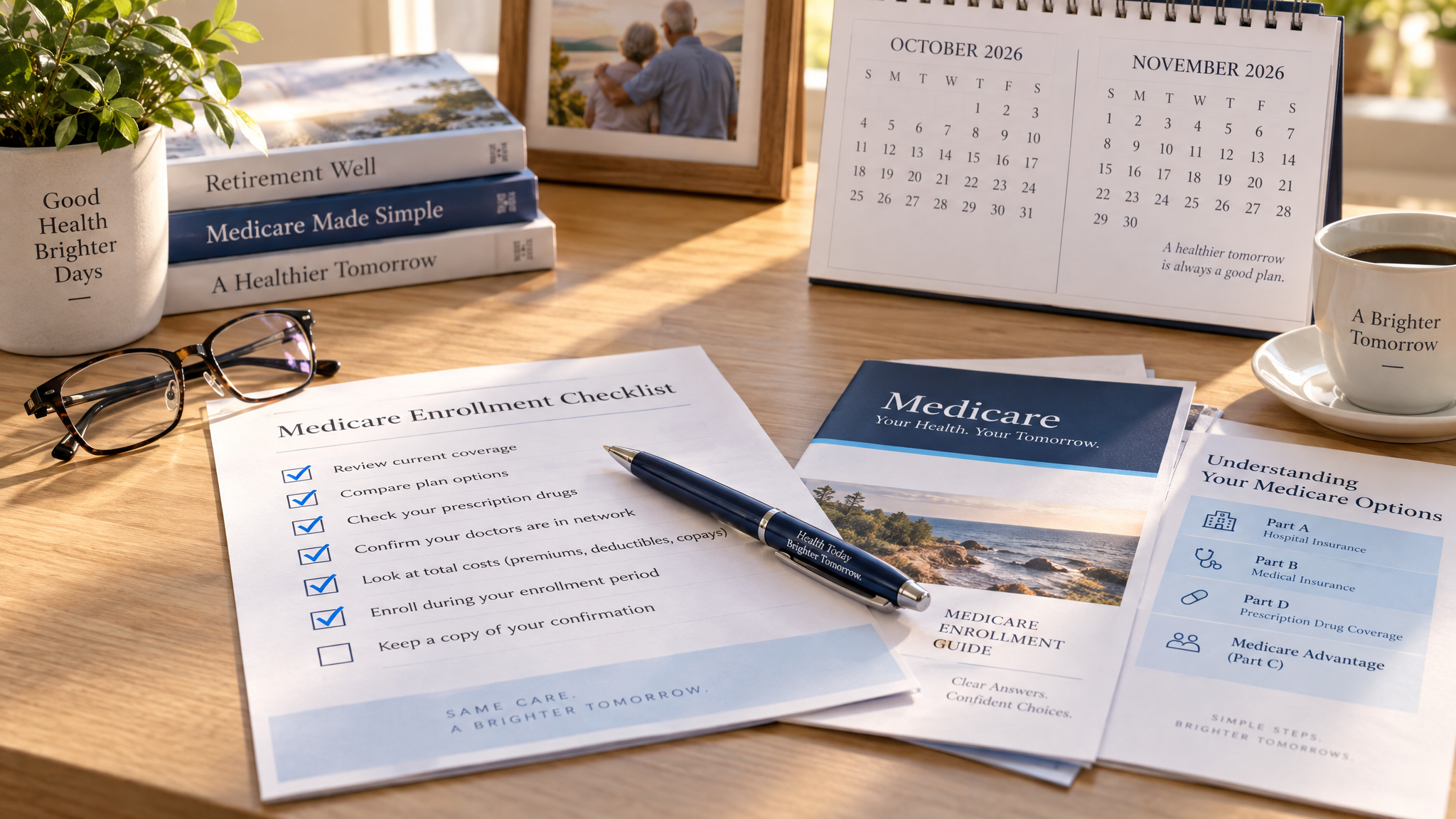
Whether a plan comes from Costco, a national insurer, or anyone else, run through these steps every year during the Annual Enrollment Period (October 15 – December 7):
1. Check your network. Confirm your doctors and your preferred hospital are still in-network for the coming year. Networks change constantly — the plan you love this year might drop your hospital next year.
2. Ask what needs prior authorization — especially skilled nursing, rehab, and home health. These are the services most often denied when you need them most.
3. Review the star rating and the maximum out-of-pocket. That's the most you'd pay in a bad year. And make sure your prescriptions are actually on the plan's covered drug list (formulary).
4. Understand the Medigap trade-off. Know your six-month Medigap window and what switching later could cost you.
And most importantly: don't make one of the biggest financial decisions of your retirement based on an advertisement or a logo — even a beloved one.
The Bottom Line
A warehouse club selling Medicare won't fix the system by itself, and the Costco plans aren't even available yet. But the story is a useful reminder of what really matters: transparency, a plan that actually covers the care you need, a network that includes your doctors, and an honest understanding of how your choices today affect your options tomorrow.
The Costco name might bring some welcome accountability to the "scariest paperwork of your life." But the smartest thing you can do — with any plan — is get personalized, unbiased guidance before you sign up.
Frequently Asked Questions
Need Help? Let's Talk!
Have questions about this topic or need personalized guidance? Our team at JKJ Enterprises is here to help you navigate your options.
Contact Us Today